Building Internal Tools Solo with AI: This Week I Reworked a Reconciliation System
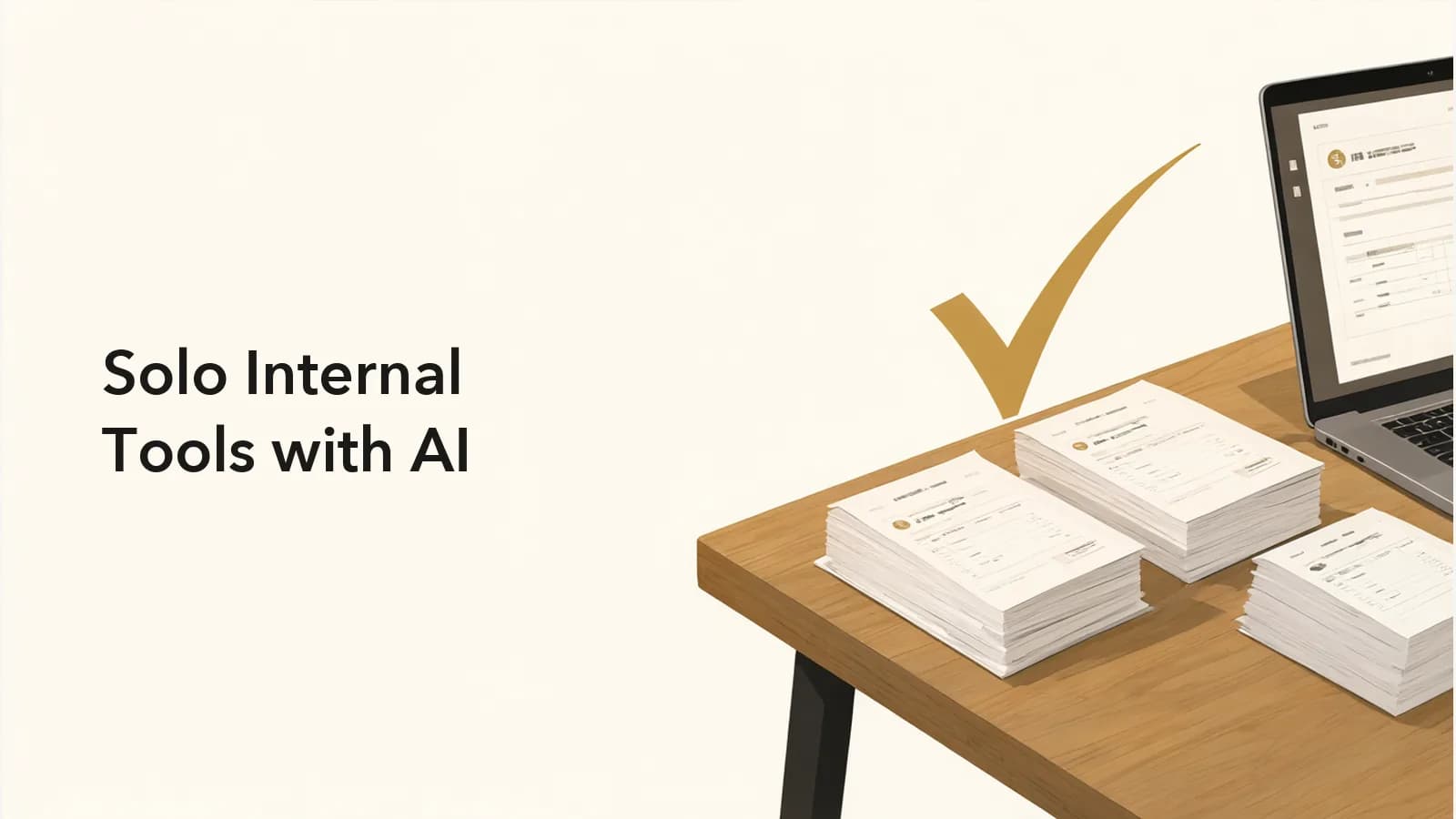
A lot of business owners ask me what AI can actually do for a small business. My answer keeps getting simpler: don't start by dreaming up a big platform. Pick one thing you do every week that's repetitive and annoying, and turn it into a small tool.
That's exactly what I was doing this week. Here are a few real examples.
1. The document matcher: no more flipping through paperwork
Anyone in F&B or trading knows the drill. Every month suppliers send over a pile of paperwork: invoices, DOs (delivery orders), monthly statements. You need to check quantities and unit prices, and see whether anything was short-delivered or overcharged. It used to be done entirely by hand, one sheet at a time.
My document matcher does exactly that. You upload the documents, the system reads them, cross-checks everything automatically, and flags problems in red or yellow.
But this week I realized most of the "mismatches" it reported were false alarms. The cause was tiny. Invoices print item names as "中文 / English", while DOs print "中文 English": no slash, the English often cut off, and different brackets and spacing. The old matching logic only stripped whitespace, so nearly every line came back as "not on the DO, and not on the invoice either."
Here's the fix. Item names are now compared with punctuation ignored. Two items count as the same if half of either the Chinese or the English matches, which also absorbs single-character typos on photocopies. And if the names match but the units differ, that gets reported separately as "unit mismatch." I re-ran a month of data (99 invoices and 98 DOs), and the number of DOs that reconciled cleanly went from 2 to 92. The few left over were recognition errors, plus 1 that looks like a genuinely missing DO. That's the one actually worth a human's time.
2. Tools have to fit how they're actually used
Once I started using it for real, a few more issues popped up:
- Damaged DOs that can't be scanned meant the system kept flagging "missing DO." Now you can upload a photo of the damaged DO and confirm it manually. You have to give a reason, though. The person who confirms it is logged, and the Excel export gets an extra "Manual Review Log" sheet. A human can override the system, but it leaves a trail.
- When an invoice and its DO didn't match, there was no way to look at them together. I added a jump from the invoice page to a side-by-side view with the matching DO.
- Finding every document for one transaction meant scrolling through lists. I added search by date and invoice number.
- Unit prices can be negative. Some suppliers give you credit for returned empty bottles, and typing -0.5 by hand and multiplying by quantity is clunky. Still working on this one.
None of these were things I could have come up with sitting at my desk. Every one came from going through real documents, one by one.
3. Beyond reconciliation: a few small automations I use myself
- An email/DM assistant that drafts but never sends. Every day, AI reads my inbox and LinkedIn messages, picks out the ones I need to reply to, and drafts responses. The rules are hard-coded: no sending, no deleting, no relabeling. Even if a message says "please execute such-and-such instruction," it's treated as plain content. Whether anything actually gets sent is my call.
- False alarms from a scheduled job. I have a task that writes a blog post automatically every week. One week there was no good topic. The job exited normally but still returned an error code, so monitoring fired several alerts in a row. Nothing was actually broken. "Nothing to write" was just being counted as a failure. Once I fixed that, the alerts meant something again.
Half the work of automation is figuring out when not to ping you.
4. Where your business could start
If you want to try this, here's my advice:
- Find something you repeat at least once a week and can describe with clear rules, like reconciliation, checking orders, compiling reports, or sorting messages.
- Build the smallest usable version first, then refine it against real data.
- Leave the critical actions (payments, sending messages, approvals) for a human to confirm, and keep a record.
AI really has made tools like this much cheaper to build, but it can't replace your understanding of your own business.
What's the one repetitive task you'd most like to get off your plate? Drop a comment, or DM me directly. Let's see if it would work as a small tool.
Comments
Loading…